
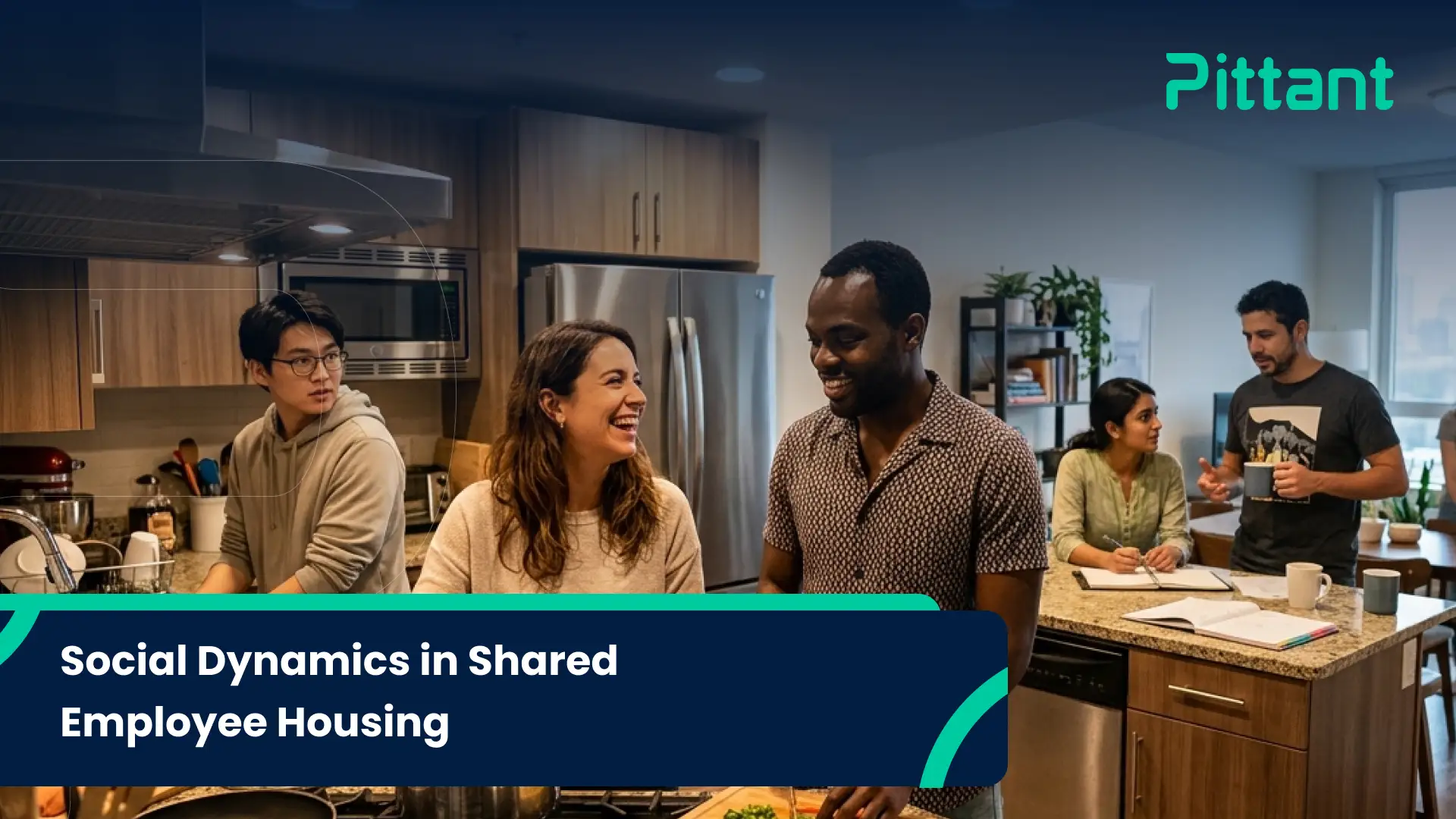
Living together really affects and changes how people work together faster than any team building session ever could. With shared kitchens, overlapping work shifts, different sleep schedules, and unspoken cultural rules, that’s a given. This is also where the expectations with employee accommodations either cause a clash or a connection.
Social dynamics in shared employee housing significantly impact trust, communication, and daily work relationships.
Understanding Social Dynamics in Shared Employee Housing
Habits, communication styles, and personal boundaries define the shared employee housing lifestyle more than any written rule ever will. Social dynamics in shared employee housing come down to how people share space, time, and responsibility. It involves:
- who cleans the kitchen
- who works night shifts
- who needs quiet at noon
Workplace housing community dynamics grow from repeated interactions. A respectful exchange builds trust. When housing works, employees collaborate more naturally at work because they already understand each other as people.
But if things don’t work out in these accommodations, the underlying tension carries over to work and negatively impacts the collaboration between teams.
Employee housing isn’t mutually exclusive from your workforce’s performance level. Instead the former directly impacts the latter. That’s why if you want effective employee accommodation management in Saudi Arabia, you need to treat housing as part of your workforce planning.
Benefits of Shared Staff Housing for Employees & Employers
We share some of the major benefits of shared staff housing:
Stronger community bonds and team collaboration
When people spend their time together, sit down to eat, and communicate even when away from work, it builds familiarity between them. And that familiarity results in stronger bonding and a better collaboration.
With social interactions in corporate housing, you get informal support systems which help your new hires learn faster, your teams spot issue way earlier, and peer support becomes routine and isn’t something forced.
When you succeed in creating a living network where knowledge, accountability, and trust move freely, the social aspects of employee accommodation affect how comfortable your employees feel asking questions, offering help, or flagging risks.
Improved affordability and convenience
Shared housing reduces daily inconveniences. Shorter commutes mean more rest and shared utilities mean fewer personal worries. That stability leads to a better focus and lower burnout with your employees feeling supported.
From an employer perspective, fewer housing related issues mean fewer distractions for HR and operations teams. When the basics work smoothly, everyone gets time back.
Real World Challenges in Employee Shared Accommodation
Challenges in employee shared accommodation don’t become too-big-to-handle overnight. They build quietly from the seemingly small moments you often ignore. But these are the things that shape affect the mood and long term morale. Some of the challenges that give way to conflict include the following:
- Noise at odd hours
- Different cleaning standards
- Disappearing or theft of shared items
- Uneven distribution of responsibilities
These are the areas where misunderstandings start taking root and end up with people carrying grudges or a feeling of discontentment even when they are working together.
Privacy, personal space, and boundaries
Privacy in employee accommodation is a big factor. People want their boundaries and personal space respected. With people already spending a lot of time together at the workplace, they might need a break from the same people at their accommodation too.
Moreover, with shared rooms, people need more emotional space. And when you add how they have different work schedules, it can amplify this need and overall frustration. When one person rests while another prepares for a shift, it can create disturbance and feeling of unrest.
You can reduce that tension by introducing clear rules around quiet hours, shared spaces, and guest access right from the start.
Cultural and behavioral differences
Cultural adjustments are often among the many housing challenges. Food habits, communication styles, and concepts of shared responsibility vary widely. Then there’s the aspects of politeness, cultural faux passes, and things that don’t automatically translate very well between different cultures.
Still, teams can adapt faster by openly acknowledging these differences and maintaining a respectful professional relationship. Tending to only ignore things creates silent resentment that continues to persist and interrupt when performing work-related tasks.
How Social Interactions Shape Workplace Culture in Housing Communities
Social interactions in corporate housing have a huge effect on how people collaborate at work. People check up on each other during their shared meals. Group activities can be a great way for building trust.
During the first weeks of employment, housing can be a big factor to if your anxiety will be eased or amplified once the employee onboarding is completed.
When communities welcome new arrivals, it shapes up a positive experience. But it can turn into a sour and negative one if the employee is made to feel isolated.
A strong housing culture means psychological safety which carries straight into meetings, projects, and deadlines.
Conflict Resolution in Shared Employee Housing
Knowing what is triggering the conflicts can be the first step towards effective conflict resolution. Trying to pretend conflicts simply don’t exist can be very counter-productive and harmful for your team’s morale in hindsight.
When you know what’s causing clashes or differences between your workers. You can plan the best suited response for each of them.
Common conflict triggers
Conflict resolution in shared employee housing involves knowing if one of the following issues is what’s causing unrest between the workforce:
- Noise complaints
- Cleaning duties
- Shared resources
- Guest rules
- Cultural misunderstandings
Structured resolution approaches
You should give your employees the tools, resources, and means to solve these issues.
We share a few examples here:
You can prevent most disputes right from the start with clear house rules, communication guidelines that encourage people to talk it out between them and resolve it, and neutral mediation channels where employees can raise concerns without feeling threatened.
Role of housing supervisors and HR
Housing supervisors and HR teams can address patterns early and clearly document the expectations. These systems are important for employee offboarding as well since transitions can disrupt shared spaces if you do not manage them carefully.
Best Practices for Managing Shared Staff Housing Communities
These are the best practices for managing shared staff housing:
Clear community guidelines and responsibility sharing
- With feedback systems, you can give your employees a voice.
- Rotating responsibilities can prevent resentment from building quietly.
- People are more willing participants in responsibility when they clearly know what’s actually expected of them.
Designing spaces that support positive social dynamics
Physical environments either support cooperation or quietly undermine it. Space design impacts social behavior in the following ways:
- Shared social zones encourage connection
- Quiet areas provide an undisturbed place to actually rest
Encouraging inclusive community engagement
Cultural exchange events, team meals, and peer led initiatives create shared experiences. These efforts make it easier to find employee accommodation that actually works for diverse teams.
Case Based Perspective: When Shared Housing Works Best
For employee accommodation in Saudi Arabia, you should integrate housing with HR systems for strongest outcomes. With clear policies, cultural awareness, and ongoing support you can turn shared living into an asset.
We have some insights for how you can make shared housing work to its fullest potential which we share in this employee accommodation guide for Saudi:
- Shared housing succeeds in remote workforce hubs where teams rely on each other daily
- It works well for project based roles with clear timelines and shared goals
- Hospitality staff residences often thrive when their routines complement each other
On the other hand, poorly managed environments show the opposite pattern. When there is a significant lack of rules, accountability, and support, the result is a higher turnover and disengaged employees.
Build Positive Social Dynamics in Shared Employee Housing with Pittant
Trust, communication, long-term employee retention, and living conditions make up for the social dynamics in shared employee housing. When respect, structure, and inclusion guide daily interactions, housing becomes a place where teams grow together.
When employers thoughtfully manage shared living, it strengthens workplace housing community and supports healthier employee relationships.
And as an HRMS partner in Saudi Arabia, we see it every day that when people live better together, they work better together too. Integrate your housing accommodations with HR systems. Contact us at Pittant Now.
FAQs
What are social dynamics in shared employee housing?
How people interact, communicate, and share responsibility when living together in accommodation provided by their employment is their social dynamic.
What are the key benefits of shared staff housing?
Shared staff housing benefits in form of stronger team bonds, lower daily stress, faster onboarding, and more natural collaboration at work.
What challenges commonly arise in employee shared accommodation?
Noise issues, cleaning expectations, privacy concerns, and cultural differences are the most common challenges in employee shared accommodation.
How can conflicts be managed in shared employee housing?
You can manage conflicts in shared employee housing by setting clear rules, having open communication channels, and mediate while keeping a neutral stance.
What best practices support a healthy shared employee housing lifestyle?
The best practices to support a healthy shared employee housing lifestyle include practicing clear guidelines, having inclusive activities, active conflict resolution and management, and providing workers with a supportive space.